

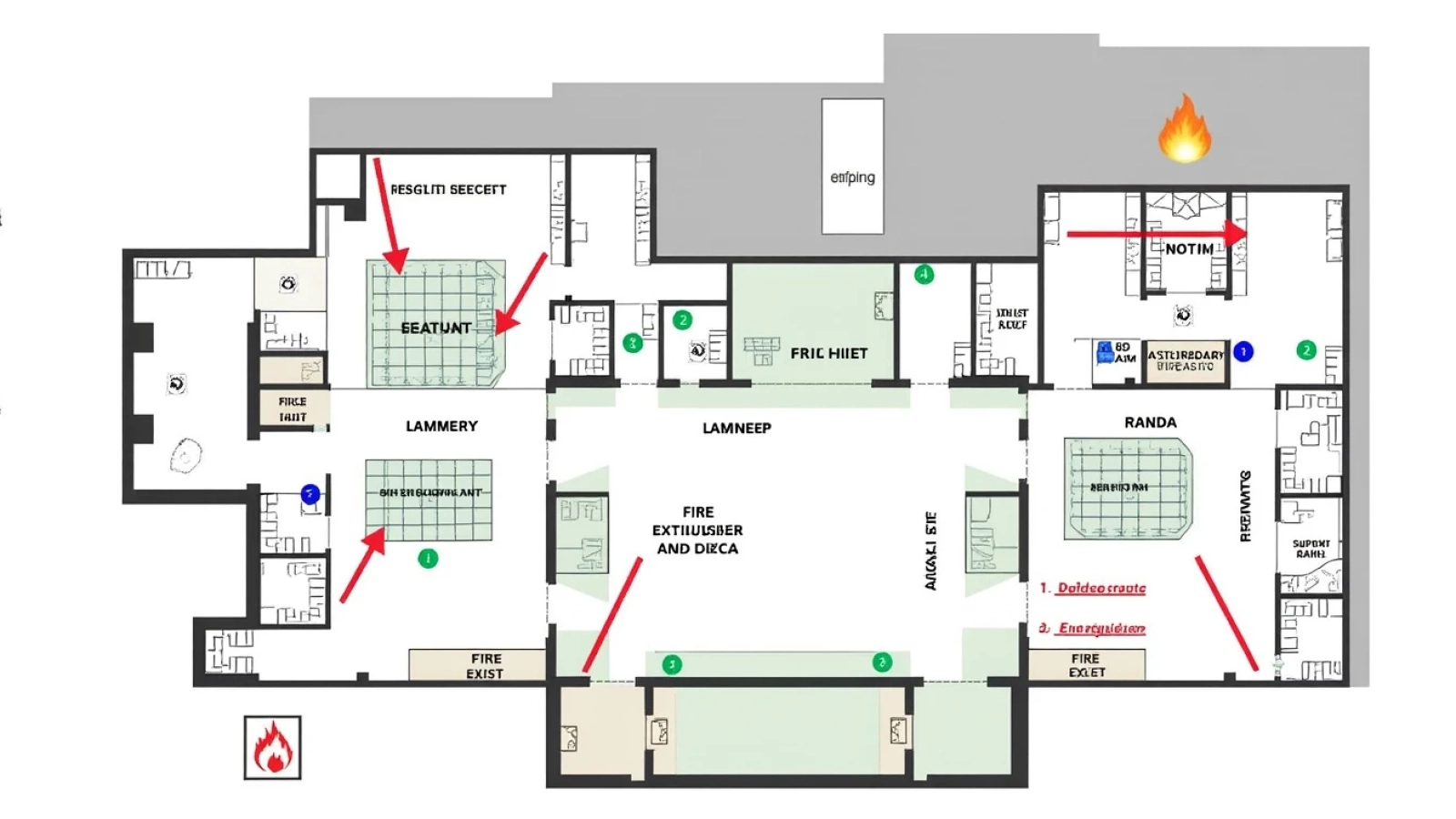
In the event of a fire emergency, having a well-structured fire escape plan can mean the difference between safety and tragedy. An effective fire escape plan not only outlines the quickest routes to safety but also prepares employees to act swiftly and calmly. This blog post will guide you through the essential steps to create a comprehensive fire escape plan tailored to your facility.
1. Assess Your Facility
Before drafting your fire escape plan, conduct a thorough assessment of your facility. Identify potential fire hazards, such as flammable materials, electrical equipment, and areas where fires are likely to start. Understanding these risks will help you determine the best escape routes and strategies.
- Document Hazards: Create a list of potential fire hazards and their locations within the facility.
- Evaluate Exits: Identify all possible exits, including doors and windows, and consider how accessible they are in an emergency.
2. Develop Clear Escape Routes
Once you have assessed your facility, map out the primary and secondary escape routes. Ensure that these routes are clearly marked and easily accessible.
- Mark Escape Routes: Use signage to indicate all exit paths. Make sure these signs are visible and illuminated.
- Keep Paths Clear: Regularly check that escape routes are free from obstructions such as furniture or equipment that could impede evacuation.
3. Designate Assembly Points
Establish safe assembly points outside the building where employees can gather after evacuating. These locations should be far enough from the building to avoid smoke and flames but close enough for everyone to reach quickly.
- Communicate Locations: Clearly communicate the designated assembly points to all employees and ensure they know how to get there from various parts of the facility.
4. Assign Roles and Responsibilities
During a fire emergency, knowing who is responsible for what can streamline the evacuation process. Assign specific roles to employees, such as:
- Fire Wardens: Designate individuals responsible for leading evacuations and ensuring everyone is accounted for at assembly points.
- Communication Leads: Assign someone to communicate with emergency services and relay information about any individuals who may be unaccounted for.
5. Practice Regularly
Creating a fire escape plan is only effective if everyone knows how to execute it. Conduct regular fire drills to familiarize employees with the escape routes and procedures.
- Simulate Scenarios: Practice various scenarios during drills, such as blocked exits or assisting individuals with disabilities, to prepare employees for real-life situations.
- Gather Feedback: After each drill, collect feedback from participants to identify areas for improvement in your escape plan.
6. Review and Update Your Plan
Fire escape plans should not be static documents; they need regular reviews and updates based on changes in your facility or personnel.
- Schedule Reviews: Set a schedule for reviewing your fire escape plan at least annually or whenever significant changes occur in your facility.
- Incorporate Changes: Update the plan based on feedback from drills or any new hazards that may arise.
Conclusion
An effective fire escape plan is crucial for ensuring the safety of everyone in your facility during a fire emergency. By assessing risks, developing clear escape routes, designating assembly points, assigning roles, practicing regularly, and reviewing your plan frequently, you can create a robust strategy that enhances safety preparedness.For assistance in developing or improving your fire escape plan, contact Fire Risk Solutions today!
FAQs
- Why is it important to have a fire escape plan?
A fire escape plan ensures that everyone knows how to evacuate safely during an emergency, reducing panic and confusion. - How often should we conduct fire drills?
It’s recommended to conduct fire drills at least twice a year to keep employees familiar with evacuation procedures. - What should be included in a fire escape plan?
A comprehensive fire escape plan should include clear escape routes, designated assembly points, assigned roles during an evacuation, and procedures for assisting individuals with disabilities. - How can I ensure that all employees are aware of the escape plan?
Regular training sessions and clear communication about the plan are essential. Displaying maps of escape routes throughout the facility can also help reinforce awareness. - What should I do if my facility layout changes?
Any changes in layout should prompt an immediate review and update of your fire escape plan to ensure it remains effective.
Leave A Comment